
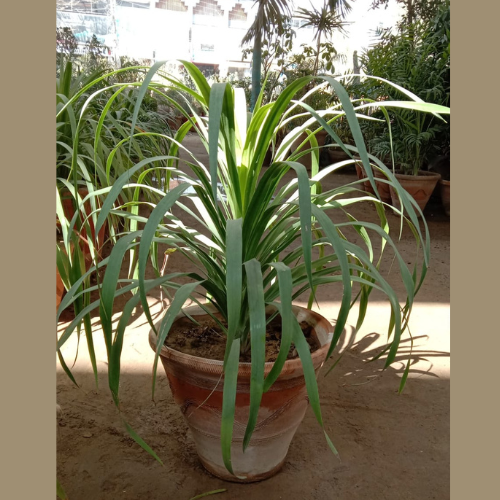


The plant is primarily grown for its attractive foliage, which is often variegated and comes in a rainbow of colors. The yellowish-white flowers rarely appear on indoor plants. In their native tropical environments, some dracaena plants grow up to 20 feet tall or more, but as indoor houseplants, most remain under 8 feet tall. The lifespan of the plant depends on the species, some last several years whereas others live for decades.
When you shop for a dracaena, you might come across plants that are sold under the common name dracaena but have a different botanical name, such as the ti plant (Cordyline australis), which is sometimes sold under the name giant dracaena.
| Common Name | Dracaena; various species have different common names |
| Botanical Name | Dracaena spp. |
| Family | Asparagaceae |
| Plant Type | Shrub |
| Mature Size | 2-10 ft. tall, 1-2 ft. wide |
| Sun Exposure | Partial |
| Soil Type | Moist, well-drained |
| Soil pH | Acidic |
| Hardiness Zones | 10–12 (USDA) |
| Native Area | Asia, Africa, Australia |
| Toxicity | Toxic to dogs and cats 1 |
Dracaena Care
Here are the main care requirements for growing a dracaena:
- Select a location in bright, indirect light indoors or dappled sun outdoors.
- Plant it in well-draining, slightly acidic potting mix or garden soil.
- Water it regularly in spring and summer and reduce watering in winter.
- Increase humidity levels for houseplants in the winter if needed.
- Fertilize monthly with a water-soluble houseplant fertilizer.
- Prune in the spring or summer to control the plant’s growth if needed.
Planting
In USDA Zones 10-11, you can plant dracaena in the landscape. The plants will grow much larger than houseplants so make sure the species of your choice fits the location as it grows into a mature plant, often a sizeable tree.
Select a location with partial shade, ideally dappled sun cast by other plantings. If the plant receives direct sun, morning sun is preferable to the hot and harsh afternoon sun. The soil in the planting location needs to be well-draining and slightly acidic, with a pH between 6.0 and 6.5.
Light
Place dracaena in a spot with bright indirect light. While the plant tolerates short periods of direct sunlight, long exposures will cause leaf scorch. Indoors, it also tolerates low-light conditions although it will grow better with more exposure to indirect light.
Outdoors, it needs a location in partial shade or dappled sun.
Soil
For potted plants, use any peat-based commercial potting mix, which has the slight acidity that these plants prefer.
If grown in the landscape in tropical regions, the soil should be rich and well-drained.
Water
Keep the plants consistently moist during their growing season (spring through fall), but allow them to go drier in the dormant winter period. Water them thoroughly each week during the active growing season, letting excess water drain through the pot into a tray or basin beneath. In winter, water moderately every two weeks.
Temperature and Humidity
Most dracaena species thrive at temperatures of 70 to 80 degrees F but will react badly if temperatures drop below 50 degrees F. These tropical plants like a fairly high humidity level, which is often a problem for indoor plants during the dry winter months. Mist or use a room humidifier if the air in your home is dry.
Fertilizer
During spring and summer, give dracaena houseplants a monthly feeding with a water-soluble fertilizer formulated for houseplants. Do not fertilize in fall and winter when plant growth slows down.


Reviews
There are no reviews yet.